

Conservation Committee Report
by Ralph Tolle, Committee Chair
Washington’s Roadless Forests Need Your Voice
Two million acres of Washington’s national forest roadless lands could be opened to logging, mining, oil and gas development, and new road construction if federal protections under the 2001 Roadless Area Conservation Rule are eliminated.
That includes treasured areas in the Mt. Baker-Snoqualmie, Okanogan-Wenatchee, Olympic, Gifford Pinchot, Colville, and Umatilla national forests—places many of us know and love for hiking, camping, skiing, fishing, hunting, boating, wildlife watching, and simply experiencing wild forests without roads and clearcuts.
These lands also protect clean drinking water, fish and wildlife habitat, and Tribal treaty rights and cultural resources.
The Roadless Rule has survived more than 25 years of challenges, backed by strong public support. Now it is again at risk. The Forest Service is accepting public comments on its proposal to repeal the rule, with comments due September 21.
What can you do?
Speak up for Washington’s roadless forests. Submit your own comment and tell the Forest Service you support the “No Action Alternative,” which would retain the Roadless Rule.
Have you hiked, camped, skied, fished, or simply enjoyed one of Washington’s roadless areas? Tell them why these places matter to you.
The easiest way to submit a comment is through the National Audubon Society’s action page: https://act.audubon.org/a/save-roadless-areas-2026
Learn more here: https://www.audubon.org/news/protecting-roadless-rule-safeguards-more-just-forests
For background and additional ways to take action, visit: https://roadless.org/
September 21 is the deadline. Please make your voice count for Washington’s wild forests.
As a wise teacher once told me, “if it is to be, it is up to me,” which in this case means you, me, everyone who truly cares about our National Forests.

President’s Report
by Bill Derry
Edmonds Marsh
The State has finally finished its 2024 financial audit and the grant contract and authorization to hire a consultant should be approved by the City Council this month. This grant will provide a 30% design for restoration of the estuary for the Edmonds Marsh. More information here: https://www.edmondsmarshestuary.org/
Conservation Committee
I am excited for our revitalized Conservation committee led by Ralph Tolle. We have eight members and three subcommittees: Forest Practices, Bird Friendly Communities and Puget Sound Lowlands and Shorelines. You’ll be hearing more about this in the coming months.
Lights Out
Every year, up to a billion birds in North America are killed by colliding with windows; most at night and most during Spring and Fall migration. Audubon Washington is making a big push this year and next to address the issue by urging people and organizations to turn off lights after 10pm especially in September-October and April-May during peak migration. More here: https://www.audubon.org/washington/projects/lights-out-washington
Edmonds Residents: I have submitted a request to the City of Edmonds to pass a proclamation supporting the Lights Out Program. Please email the mayor and ask him to forward the Lights Out Proclamation to the City Council for approval.
Mike Rosen, Mayor of Edmonds
Bird Walks in and near Snohomish, August 1, 2026
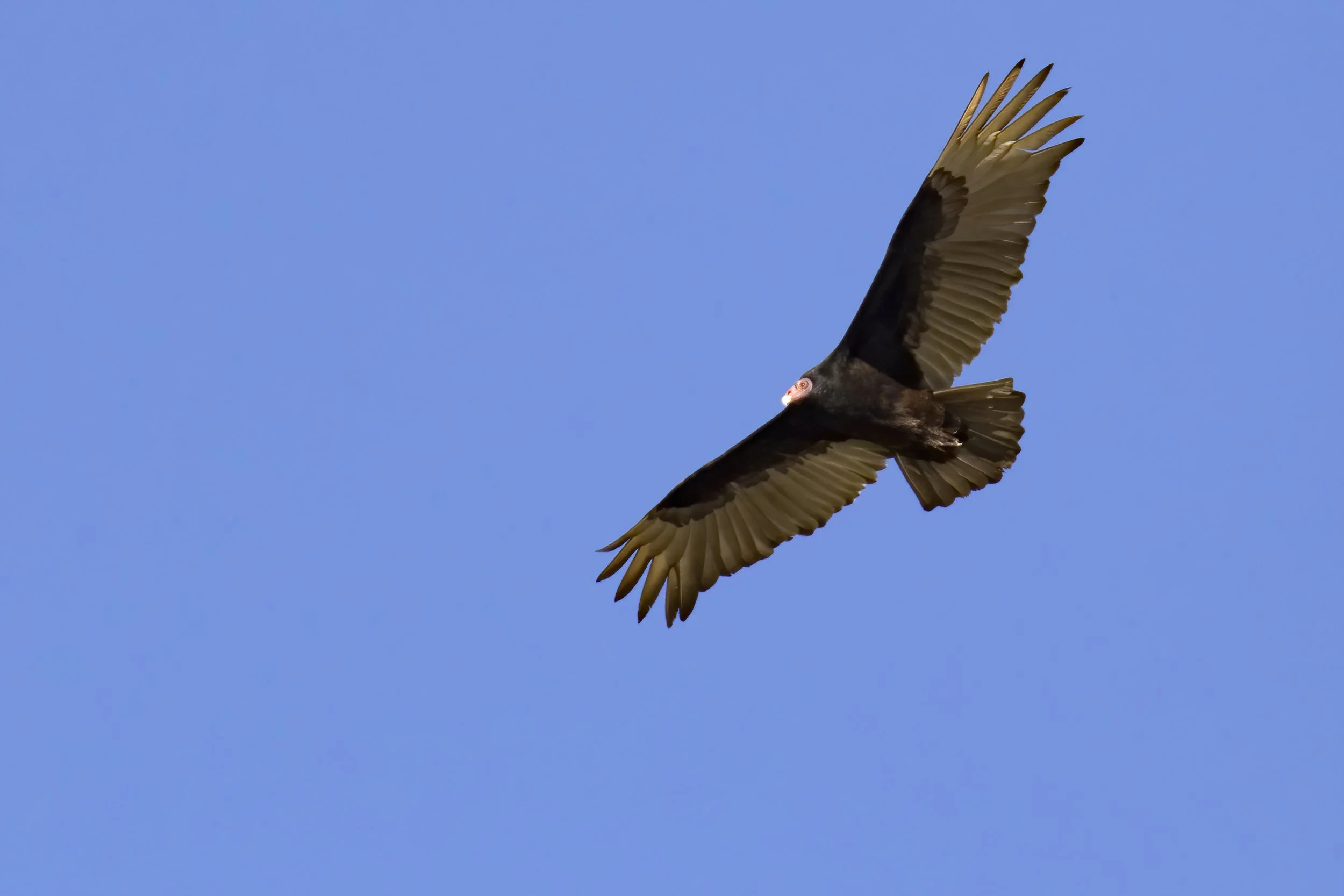
Turkey Vulture by Mick Thompson
By Douglas Resnick
We met this morning near the eastern trailhead of Riverview Wildlife Refuge in Snohomish. The weather was cool and cloudy. As we began walking, we espied a Turkey Vulture soaring toward the Snohomish River. Continuing, we were surprised to find a sign across our path: "Trail Closed." After some discussion, we resumed walking, this time along city streets, toward the western trailhead. As this was open, we resumed our birding.
The trail passes at first southwestward through a marsh, conveniently at some height above the water. From our vantage point, we found a Green Heron and a Great Blue Heron. Further along the trail, the marsh is replaced on one side by one of the lagoons of the Wastewater Treatment Plant. There, we found numerous Mallards and a sprinkling of Wood Ducks. In the air above the lagoon flew a crowd of Tree Swallows and a few Vaux's Swifts. The main attraction on the other, marshy side of the trail turned out to be the birds flying between or perching on the area's trees. Prominent among them were Cedar Waxwings and American Goldfinches.
Where the trail turns to the west, it skirts a large field. Above the field flew many Barn Swallows. Although encroached on by knotweed, a narrow aperture remains, where a short staircase at the field's northwestern corner leads to the Snohomish River. No birds were in the river, when we arrived, although we spotted a couple of American Crows in a tree on the opposite shore. Picking up the trail again, we headed southeast, between the field and the woodsy area beside the river. Here, bird activity increased: we found Western Wood-Pewee, Willow Flycatcher, House Finch, Spotted Towhee, Common Raven, and Mourning Dove. Also present, though viewable only with difficulty, due to its insistence on staying almost hidden among the leaves of a tree, was a Black-headed Grosbeak.
We continued in this way past a second lagoon, where we found many more Wood Ducks, until we reached the second "Trail Closed" sign; then, we walked back to our cars. In order to make up for the lack of toilet facilities at either of the morning's birding sites, we next drove to the conveniently close Snohomish branch of the Sno-Isle Libraries. Afterwards, we set out for the Fobes-Ebey Slough Dike Trail.
When we met at the end of Fobes Road, it was raining. Nonetheless, we set out, walking southeast along the edge of the road. Before we reached the trailhead, we caught the first of our several views at this site of an Eastern Kingbird. Following the trail, we headed almost due west, then turned to the southwest, paralleling the slough. As we proceeded along this course, the rain lessened, then stopped altogether.
In the marshy area east of the trail, we found a few Mallards and a lone Canada Goose. Flying back and forth over the trail were several Tree Swallows and Barn Swallows. Two Belted Kingfishers called out, as they flew beside the slough. Flying from tree to tree, or from bush to bush, were the flycatchers: Eastern Kingbird and Willow Flycatcher. It was well past noon, when we were startled by the view of group of dark birds that arose briefly from the marsh. After passing by the partially occluding vegetation beside the trail, we had a clear view of a large flock of Red-winged Blackbirds foraging among the cattails. At this point, we turned back. Just before we arrived at our cars, two Mourning Doves landed on the wires overhanging the road.
At the cul-de-sac, we parted company, several of us heading for a lunchtime reunion at Snohomish Bakery.

Susie Schaefer. Courtesy Marthlyn Jones.
Susie Schaefer Obituary
Susie Schaefer, longtime Edmonds resident and environmental/social activist, died on July 25, 2026 as she wished--with peace, dignity, and with friends and dogs at her side as chickadees chirped in the trees. Susie grew up in Palo Alto, California and spent every summer at the beloved cabin built by her father in the Sierras at Lake Kirkwood.
She loved theater, but realized that she would never be a dancer, so she followed her desire to be of service and earned her Masters of Social Work at UW in 1971. Social work became her lifelong profession and led to her becoming Regional Administrator of the Division of Developmental Disabilities in Everett.
In addition to her career advocating for others, she was very active in environmental and social issues. She was Vice President of Pilchuck Audubon Society and led numerous birding trips and Christmas Bird Counts. She was one of the founding leaders of Puget Sound Bird Fest and the Edmonds Wildlife and Native Plant Demonstration Garden that is now named in her honor. Susie was one of the first people to recognize the importance of protecting and restoring the Edmonds Marsh and was a well-known presence at Edmonds City Council meetings speaking on behalf of numerous ecological causes. Even her vacations were Earthjustice work excursions overseas for which she gladly paid. On an Earthjustice trip to Vietnam, Susie was the first to spot a rare species of crane after its long absence.
After her retirement from social work, she co-founded the non-profit Open Doors for Multicultural Families to help them access and navigate services for their disabled children. She continued her dedication to social justice as a member of Women in Black, standing for Peace at the ferry dock every Sunday for many years.
And we must acknowledge her Boxer dogs! Susie adored every one of her seven rescue Boxers, who always accompanied her on trips to the cabin.
Susie made friends with people from all over the world, hosting many of them in her home while they attended college and remained close friends with them over the years.
Susie was a force for nature and social justice—it is impossible to quantify the powerful impact she had on this world and all the inhabitants of it. Anyone who knew Susie was inspired to follow her leadership and integrity to make the world a better place.
All are invited to attend a dedication ceremony for the installation of the sign for the Susie Schaefer Wildlife and Native Plant Demonstration garden to honor her memory, date to be announced later.
If you would like to donate or volunteer in her honor, please consider:
Pilchuck Audubon Society—https://www.pilchuckaudubon.org/
Northwest Boxer Rescue—https://www.nwboxerrescue.org
Open Doors for Multicultural Families—https://opendoorswa.org/
Backyard Birding Highlights: July 26-August 25
By Mara Price
Sara and Paul Bueren had to take their feeders down because they saw 2 House Finches and a Purple Finch with Mycoplasmosis and they kept them down for 21 weeks and they cleaned and disinfected them. Then all the birds returned to the feeders. They reported 10 Dark-eyed Junco in the yard/feeders, 6 Chestnut-backed Chickadee in the yard/feeders, 3 Black-capped Chickadee in the yard/feeders, 5 Purple Finch in the yard/feeders, 6 House Finch in the yard/feeders, 3 Black-headed Grosbeak in the yard/feeders, a Bewick’s Wren in the yard/feeders, a Hairy Woodpecker in the yard/suet, a Downy Woodpecker in the yard/suet, a Pileated Woodpecker in the yard/suet, 2 Mourning Doves in the yard/feeders, 3 Red-breasted Nuthatch in the yard/feeders, 3 Spotted Towhee in the yard/feeders, 2 Band-tailed Pigeon in the yard/feeders, 5 Pine Siskin in the yard/feeders, 2 Anna’s Hummingbirds in the yard/syrup, a Rufous Hummingbird in the yard/syrup, a Cooper’s Hawk in the yard, 5 American Crows in the yard/feeders, 2 Violet-green Swallows in the trees, 2 Song Sparrows in the yard/feeders, 6 American Goldfinch in the yard/feeders, a Barn Swallow by itself, a Northern Flicker in the yard/suet, a Golden-crowned Kinglet in the yard, a Brown Creeper in the yard/feeders, 2 Song Sparrows in the yard/feeders, 2 Purple Martin in the yard/feeders and a Western Tanager in the yard/feeders for a total species count of 30.
Kriss Erickson’s report from Everett included18 Black-capped Chickadee in the yard/feeders, 9 Chestnut-backed Chickadee in the yard/feeders, 3 Bewick’s Wren in the yard/feeders, 7 Steller’s Jays in the yard/feeders, 23 Bushtit in the yard/feeders, 16 American Crows in the yard/feeders, 8 Western Gulls flying overhead, 14 American Robins in the yard/feeders, 6f/4m House Finches in the yard/feeders, 3m/3f Spotted Towhee in the yard/feeders, 1m/1f Downy Woodpecker in the yard/suet, 8 Northern Flickers in the yard/suet, an Osprey flying really close overhead, 10 Dark-eyed Junco in the yard/feeders, 6 Song Sparrows in the yard/feeders, 1m/1f Hairy Woodpecker in the yard/suet, a Merlin flying close by overhead, 5 Anna’s Hummingbirds in the yard/syrup, 3f/1m American Goldfinch in the yard/feeders, a Barred Owl in the yard,1m/1f Black-headed Grosbeak in the yard/feeders, 1m/1f Common Redpoll in the yard/feeders, 1m/1f Red-breasted Nuthatch in the yard/feeders, a White-crowned Sparrow in the yard/feeders and 3 Golden-crowned Sparrow’s in the yard/feeders for a total species count of 25.
Sue Huskey’s report from Marysville included 12 Bushtits in the yard/feeders, 2f Anna’s Hummingbirds in the yard/syrup, 4 Chestnut-backed Chickadee in the yard/suet, 1m/2f House Finch in the yard/feeders, 2 Black-capped Chickadee in the yard/suet, a Red-breasted Nuthatch in the yard/feeders, 2 Cedar Waxwing in the yard/feeders, a Northern Flicker in the yard/suet, 4 Dark-eyed Junco in the yard/feeders, 2 Steller’s Jays in the yard/feeders and 3 American Goldfinch in the yard/feeders for a total species count of11.
Maureen Schmitz’s report from Everett listed 3 Red-breasted Nuthatch in the yard/feeders, 12 Bushtit in the yard/feeders, a Northern Flicker in the yard/suet, 3 Black-capped Chickadee in the yard/feeders, 4 Chestnut-backed Chickadee in the yard/feeders, a Bald Eagle flying over, 4 American Crows in the yard, 3 Song Sparrows in the yard/feeders, a Band-tailed Pigeon in the yard and 8 flying over, a Steller’s Jay in the yard, a Hairy Woodpecker in the yard/suet, a Great Blue Heron flying over, 10 Gull species flying over, an American Robin in the yard, 2 Anna’s Hummingbirds in the yard/syrup, 4 House Finch in the yard/feeders, a Bewick’s Wren in the yard/feeders, a Golden-crowned Kinglet in the yard, a Swainson’s Thrush heard in the yard, a Black-headed Grosbeak in the yard, 3 Dark-eyed Junco in the yard and 2 Spotted Towhee in the yard/feeders for a total species count of 22.
Mary Sinker’s report from her property in Stanwood listed 3 American Crows in the yard, 15 American Goldfinch in the yard/feeders, 20 American Robins in the yard, 10 Anna’s Hummingbirds in the yard/syrup, 2 Bald Eagles in the trees, 2 Band-tailed Pigeons in the yard, 6 Barn Swallows in the trees, a Barred Owl in the trees, 3 Bewick’s Wrens in the yard/feeders, 11 Black-capped Chickadee in the yard/feeders, 14 Black-headed Grosbeak in the yard/feeders, 2 Brown Creepers in the yard/trees, 15 Brown-headed Cowbird in the yard/feeders, 7 Bushtit in the yard/feeders, 3 Cedar Waxwing in the yard/feeders, 10 Chestnut-backed Chickadee in the yard/feeders, a Chipping Sparrow in the yard/feeders, 3 Common Yellowthroat in the yard/feeders, a Cooper’s Hawk in the yard, 4 Dark-eyed Junco in the yard/feeders, 4 Downy Woodpeckers in the yard/suet, 2 Eurasian-Collared Doves in the yard, 3 European Starling in the yard/feeders, a Great Blue Heron at the creek, a Great Horned Owl in the woods, 5 Hairy Woodpeckers in the yard/suet, 12 House Finch in the yard/feeders, 2 House Sparrow in the yard/feeders, a Hutton’s Vireo in the yard, 4 Kinglet species in the yard, 2 Mallard Ducks at the creek, 17 Mourning Doves in the yard/pasture, 5 Northern Flickers in the yard/suet, an Olive-sided Flycatcher in the yard/feeders, 2 Orange-crowned Warbler in the yard/feeders, 3 Pacific Wrens in the yard/feeders, 2 Pileated Woodpecker in the yard/suet, 2 Pine Siskin in the yard/feeders, 4 Red-breasted Nuthatch in the yard/feeders, a Red-breasted Sapsucker in the yard/trees, 3 Red-tailed Hawk in the yard/tree, 8 Red-winged Blackbirds in the yard/trees, 10 Rufous Hummingbirds in the yard/syrup, a Sharp-shinned Hawk in the yard, 7 Song Sparrows in the yard, 7 Spotted Towhee in the yard/feeders, 2 Steller’s Jays in the yard/feeders, 6 Swainson’s Thrush in the yard/feeders, 2 Tree Swallows in the yard/trees, 2 Turkey Vultures in the pasture, a Western Flycatcher in the yard/feeders, 2 Western Wood Pewee in the yard/feeders, 3 Western Tanager in the yard/feeders,3 White-crowned Sparrow in the yard/feeders, a Willow Flycatcher in the yard/feeders, 3 Wilson’s Warbler in the yard/feeders, a Yellow Warbler in the yard/feeders, and 2 Yellow-Rumped Warbler in the yard/feeders or a total species count of 57.
My report from Marysville included 3 American Crows in the yard, 1f American Goldfinch in the yard/feeders, 2 Black-capped Chickadee in the yard/feeders, 2m/2f Black-headed Grosbeak in the yard/feeders, 4 American Robins in the yard,2 Dark-eyed Junco in the yard/feeders, 1f Hairy Woodpecker on the Hummingbird syrup, 1m Hairy Woodpecker at the suet, 8 House Finch in the yard/feeders, 3 Mourning Doves in the yard/feeder, 4 Northern Flickers in the yard/suet, 7 Steller’s Jays in the yard/feeders, a Song Sparrow in the yard, 1f/1m Western Tanager in the yard/feeders, a Red-breasted Nuthatch in the yard/feeders, a Pileated Woodpecker in the yard/suet, 5 Kinglet species in the bushes, 1m/1f Downy Woodpecker in the yard/suet and a Chestnut-backed Chickadee in the yard/feeders for a total species count of 18.
If you are interested in joining our Backyard Bird Count, please contact me at pricemara1@gmail.com or leave a message on my cell phone at (425)750-8125.